Mattress research guide
Vispring Elite Mattress: A Practical Guide to Comparing Its Details
A mattress name can start your search, but it can’t tell you everything you need to know. Here’s how to check the Vispring Elite’s current specifications, assess its comfort in person, and compare the details that matter for your bedroom and sleep habits.
Published November 16, 2026
Shopping for a mattress can feel like sorting through a stack of confident promises. Words such as “supportive,” “luxurious” and “natural” sound appealing, but they do not automatically explain how a bed will feel beneath your body or fit your home. If you’re researching the Vispring Elite mattress, the most useful first step is to confirm exactly which model is being offered and then examine its specifications one by one.
This guide is designed to help you do that without assuming any mattress is right for everyone. Model names, product descriptions and available configurations can vary between retailers and may change over time. Rather than relying on a name alone, check the current manufacturer information, ask for details in writing, and consider how the mattress performs in the context of your sleep position, preferred feel, bed base and practical needs.
The goal isn’t to produce a universal verdict. It’s to help you make a more confident comparison: one based on clear information and your own comfort, not on a headline adjective or an incomplete product listing.
Start by confirming the exact model
Before comparing comfort or price, make sure the mattress you’re considering is actually the model you intend to research. Product names can be shortened in store listings, used inconsistently in older pages, or displayed beside a collection name that is not the mattress’s full designation. The same name may also appear with different sizes, configurations or retailer-specific descriptions.
Look for the full model name on the manufacturer’s current product page or in official product literature. If you’re shopping in person, ask the retailer to identify the model on the specification sheet or order paperwork. If information online and in store does not match, pause and ask for clarification before treating the details as comparable.
This small bit of housekeeping can prevent a surprisingly large headache. A review, specification or price may relate to another model in a range, a previous version, or a different size and configuration. Confirming the name first gives every other comparison a firmer foundation.
- Check the complete model name, not just the range or brand name.
- Confirm that the listed size is the one you plan to buy.
- Ask whether the configuration shown is standard or an option.
- Note when the information was published or last updated.
- Keep a copy of the exact specifications offered with your quote.
Read the specifications beyond the headline
A useful mattress comparison turns broad labels into questions you can answer. The specification sheet is not merely a technical formality: it can help you understand what the bed is made from, how it is constructed, what options are available, and what conditions apply to delivery and care.
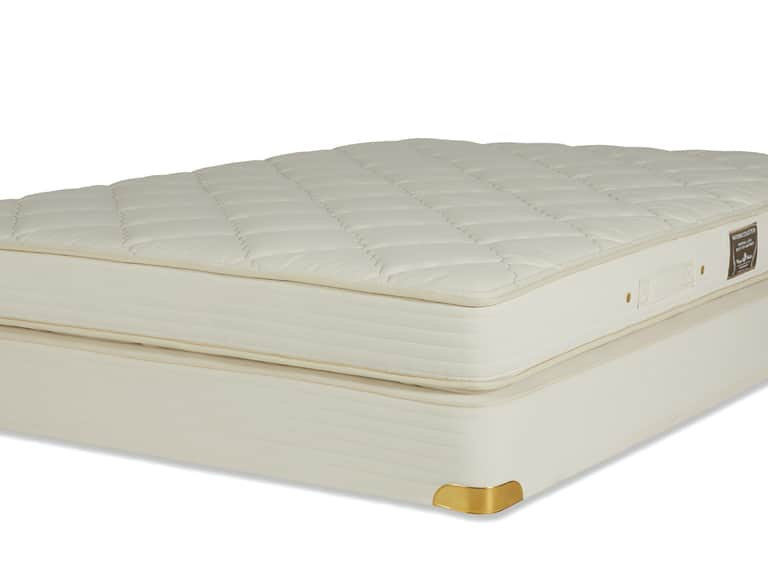
Start with construction and materials. Look for a clear description of the layers and components rather than relying on a general statement about craftsmanship or quality. Ask what materials are used, where each one sits in the mattress, and whether the description applies to the exact model and size you’re considering. If a detail is important to you—such as a particular filling, cover construction or material certification—request the specific documentation rather than inferring it from a broad marketing phrase.
Next, check the mattress’s stated comfort options. If the retailer lists a firmness or comfort choice, ask how that option is defined and whether it is available in your desired size. Firmness labels are not standardized across every company, so “firm” on one specification sheet may not correspond neatly to “firm” elsewhere. Treat the label as a starting point for a conversation, not as a guaranteed prediction of how the mattress will feel to you.
Also compare dimensions, mattress height and weight where available. These details can affect compatibility with a bed frame, headboard, fitted sheets and room layout. A deep mattress may need deeper-pocket sheets, and a substantial mattress can be harder to move through narrow halls or stairs. Practical details do not determine comfort, but they can shape whether the purchase works smoothly at home.
A quick specification check
- Full model name and current product version
- Available sizes and exact dimensions
- Construction and named materials
- Comfort or firmness options, if offered
- Recommended foundation or bed base
- Care guidance, warranty terms and delivery details
Think about feel as a personal fit
Mattress comfort is personal, and the same bed can feel different to different sleepers. Body shape, weight distribution, sleep position and individual sensitivity to pressure all influence how a surface is experienced. So can the pillow, bedding and base beneath the mattress. That is why a firmness label alone cannot settle the question.
When trying a mattress, give yourself time to lie down in the position you actually use at home. If you sleep on your side, notice how your shoulder and hip feel against the surface. If you sleep on your back, consider whether your body feels comfortably supported without an obvious gap or an uncomfortable pressure point. Stomach sleepers may have different preferences again. These are observations, not medical tests or guarantees of spinal alignment.
Try more than one position if you change positions during the night. Pay attention to whether turning feels easy, whether you feel settled or perched, and whether any area starts to feel uncomfortable. A few seconds at the edge of a showroom mattress are unlikely to reveal everything. When possible, ask about the store’s trial or comfort-exchange policy and read its conditions before relying on it.
It can help to bring a simple, neutral checklist rather than a long wish list shaped by advertising. For example: Does the surface feel comfortable in my usual position? Can I change position without effort? Do I feel secure at the edges? Is the temperature and surface feel acceptable with the bedding I expect to use? Record your impressions while they’re fresh, especially if you are testing several models.
Compare sleep position without overgeneralizing
Sleep position can guide your questions, but it should not dictate a purchase by itself. Side sleepers often notice pressure around the shoulder and hip, while back sleepers may focus on whether the surface feels evenly supportive. Stomach sleepers may care about how much they sink through the middle. Yet people within each group vary, and a single “best” firmness for every side or back sleeper would be too simple.
Use your position as a way to describe what you need to assess. If you spend most of the night on your side, test whether pressure builds at contact points. If you usually sleep on your back, notice whether the mattress feels steady and comfortable across your body. If you sleep on your stomach, check whether the position feels natural and whether you are comfortable after lying there for a while.
If you have persistent pain, a diagnosed condition, or a specific recommendation from a healthcare professional, a mattress comparison is not a substitute for clinical advice. You can explain your comfort concerns to a retailer and ask about available options, but avoid treating a mattress description as a medical promise. The most responsible approach is to separate personal comfort observations from health claims.
Check the foundation and full sleep setup
A mattress does not operate in isolation. The bed base can influence how the sleep surface feels and whether it is supported as intended. Before buying, find out what foundation the manufacturer recommends for the exact model. Ask whether the mattress is suitable for your existing frame, whether there are requirements for slat spacing or central support, and whether an adjustable base is permitted.
Do not assume that a base that fits the mattress dimensions is automatically suitable. Support requirements may depend on the construction and the manufacturer’s guidance. If your current foundation is old, uneven or damaged, ask whether it could affect comfort, performance or warranty coverage. Get the answer from an authoritative source and retain it with your purchase records.
Consider the whole bed, too. A thick mattress protector or heavily cushioned topper can change the surface feel, while sheets that are too tight may be difficult to fit on a deeper mattress. If you use a protector, check its dimensions and construction. The purpose of a protector is to help guard the mattress from everyday moisture and wear; it should not be assumed to improve support or correct a comfort mismatch.
Room access matters just as much as the bedroom footprint. Measure doorways, stairs, landings and any tight turns along the delivery route. Confirm whether delivery includes setup, removal of packaging or disposal of an old mattress, and whether these services carry separate terms or fees. It’s a less glamorous part of mattress research, but it can spare you a difficult delivery day.
Make a fair comparison with other mattresses
When you compare the Vispring Elite with another mattress, use the same questions for each option. Comparing one model’s detailed specification sheet with another’s short sales description is not a fair test. If a retailer cannot provide a particular detail, mark it as unknown rather than filling the gap with an assumption.
Build a short comparison table for yourself, even if you keep it in a notebook. Include model and size, construction, stated comfort options, recommended base, care instructions, warranty, delivery terms and price. Add a separate column for your in-person impressions. Keeping objective information and subjective feel side by side makes it easier to see which differences are meaningful to you.
Try to compare prices on equivalent terms. Check whether a quote includes delivery, setup, old-mattress removal, taxes or other charges. Note the length and conditions of any trial period, as well as return or exchange costs. A lower headline price may not represent the same overall service or configuration, while a more expensive option is not automatically a better fit.
Also look carefully at the wording of a warranty. Understand what is covered, for how long, and what responsibilities fall to you. Ask about required foundation conditions, care practices and documentation. Warranty coverage is not the same as a comfort guarantee, so clarify the distinction rather than expecting one policy to answer both questions.
Questions to ask a retailer
A good conversation can turn a polished product page into usable information. You do not need to be an expert in mattress construction to ask clear, practical questions. If an answer feels vague, follow up with a request for the relevant specification or policy in writing.
- Is this the current Vispring Elite model, and can I see the exact specification for this version?
- Which sizes and comfort options are currently available?
- What materials and construction details are specified for the model I’m viewing?
- Which bed bases are recommended, and are there any support requirements?
- What are the care instructions and warranty conditions?
- Can I try the mattress in my usual sleeping positions?
- What are the full delivery, setup, return and exchange terms?
- Are the price and services in this quote specific to the same size and configuration?
These questions are useful whether you shop online or in person. Online shoppers can contact customer service before ordering and save the response. Showroom visitors can take notes and ask for a copy of the specification. Either way, clear records make it easier to review the decision later without relying on memory.
Common comparison mistakes to avoid
One common mistake is treating “firmness” as a precise, universal measurement. Unless a brand gives a clearly defined scale and method, the word is best understood as a broad description. Your own experience—tested in a realistic position—is more useful than trying to translate one company’s label into another’s.
Another is assuming that material names alone reveal the complete feel or performance of a mattress. Construction, layer arrangement, cover and foundation all contribute to the overall experience. A material may be familiar, but the product’s full design still matters. Look for details about how components are used rather than making a decision from one ingredient or feature.
It is also easy to let an attractive model name or premium positioning do too much of the work. A name can help identify a product; it cannot tell you whether the mattress suits your preferences, whether it fits your base or whether its terms meet your needs. Likewise, confident claims about health or sleep should not replace careful questions and personal assessment.
Finally, avoid rushing through the fine print. Trial periods, exchange conditions, delivery services and warranties can vary. Read the current terms before committing, and make sure they apply to your size and configuration. If a detail would change your decision, verify it before purchase rather than hoping it will be resolved later.
A practical decision checklist
Before making a decision, pause and check whether you can answer the following questions with confidence:
- Have I confirmed the exact model and current specifications?
- Do I understand the construction, materials and available comfort choices?
- Have I tested the mattress in my normal sleeping positions, where possible?
- Does the recommended foundation match my bed frame or planned base?
- Have I checked the mattress dimensions, height and delivery route?
- Do I understand care instructions, warranty terms and any trial policy?
- Have I compared the full delivered price, not just the listed price?
- Can I explain why this option seems suitable for my preferences?
If several answers are still unclear, that does not mean the mattress is necessarily a poor choice. It means you have a few more questions to ask. Good research is not about finding a perfect product on paper; it is about understanding the trade-offs well enough to make a decision that fits your circumstances.
The bottom line on comparing the Vispring Elite
Researching the Vispring Elite mattress is most productive when you look past the model name and focus on verifiable details. Confirm the current specification, compare materials and construction, assess the feel in your own sleeping positions, and check the manufacturer’s guidance for your bed base. Then weigh those findings alongside practical factors such as dimensions, care, delivery and warranty conditions.
No single firmness label or feature can promise a perfect night for every sleeper. But a clear checklist can make the process feel less like guesswork and more like a thoughtful choice. Ask for specific answers, keep the information that matters, and give your own comfort observations a central place in the comparison.
A mattress should make sense not only in a product description, but in the real setting where you’ll sleep. That is the standard worth bringing to any mattress purchase.