Bedding & Sleep Science
Inside Dunlop Latex Mattresses: Layers, Materials, and Airflow
A mattress is more than its top layer. The way latex, wool, and cotton are arranged—and the foundation beneath them—can shape how a bed feels, responds to movement, and manages moisture through the night. Here’s a clear-eyed guide to what those materials do and how to care for a breathable sleep surface.
Open the description of an organic latex mattress and you may find a small roll call of natural materials: Dunlop latex, wool, cotton. Each sounds appealing on its own, but the real story is in how the materials work together. A resilient core can provide the mattress’s main support. Wool and cotton can soften the surface and absorb moisture. A well-supported base can help the whole construction perform as intended.
That doesn’t mean one material automatically guarantees cooler sleep, perfect alignment, or a universally comfortable feel. Mattress comfort is personal, and product labels can leave out important details. Thickness, layer order, firmness, cover construction, room conditions, and bed-frame design all matter. Understanding those parts makes it easier to compare mattresses without getting swept up in a list of attractive-sounding claims.
First, what is Dunlop latex?
Dunlop is one method of producing latex foam. In broad terms, latex is formed into a foam structure and cured in a mold. The resulting material is resilient: when compressed, it tends to spring back rather than retain a deep impression in the way some slower-recovering foams do. How pronounced that bounce feels depends on the specific formulation, thickness, firmness, and layers around it.
“Dunlop” describes a manufacturing method, not a guarantee that a mattress is entirely natural or organic. A product may contain natural latex, synthetic latex, or a blend, so buyers who care about composition should look for clear material disclosures. Organic claims also apply to specified materials and standards, not automatically to every component in a finished mattress. Check the product’s documentation and certifications rather than relying on a single word in its name.
In a mattress, a Dunlop latex core can serve as a substantial support layer. It offers a buoyant, relatively responsive feel: the body compresses the surface, and the material pushes back. Some sleepers appreciate that easier-to-move-on sensation; others prefer a slower, more enveloping response. Neither preference is a rule about what is “better.” The useful question is whether the mattress lets you rest comfortably in your usual positions.
How layers shape the feel
Think of a mattress as a small system rather than a single slab. The support core, any comfort layer, the upholstery, and the outer cover each influence the experience. A thick, firm latex core with a thinner, softer layer above it can feel different from a mattress with latex of one firmness throughout. Even when two beds list similar materials, their layer thicknesses and order may lead to a different surface feel.
The core generally has the largest role in supporting the body and limiting how far it sinks. A comfort layer above it can provide more cushioning at the surface. Then the cover and any quilted upholstery add another point of contact. Wool, cotton, or other fibers in that top assembly may change the initial hand-feel and how the mattress absorbs and releases moisture.
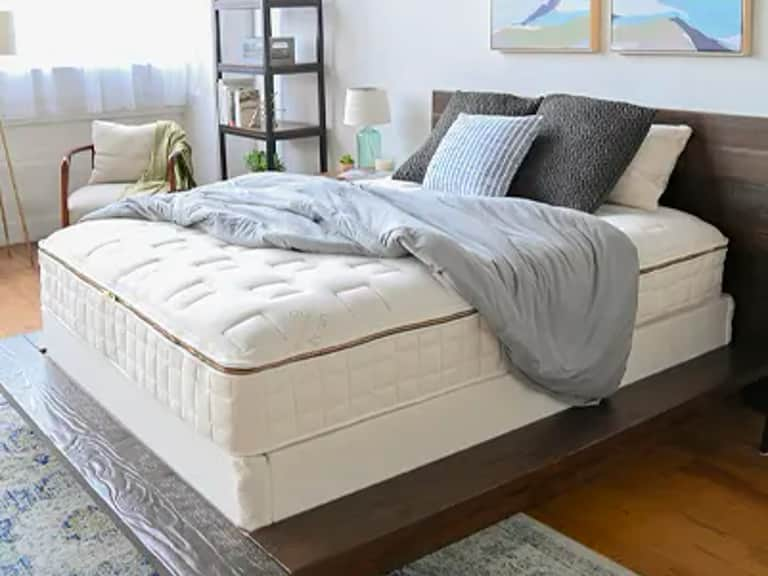
Consider one example: the Organic Mattress - Latex is described as a 6.5-inch mattress built around a GOLS-certified organic Dunlop latex core, with felted organic wool and an organic cotton canvas cover. Its materials and construction illustrate how latex can anchor a relatively straightforward mattress design while wool and cotton form part of the surrounding surface. The maker’s care guidance includes using a slatted frame for ventilation, flipping monthly, and using a mattress protector. Always confirm current specifications and instructions before making a purchase or changing a care routine.
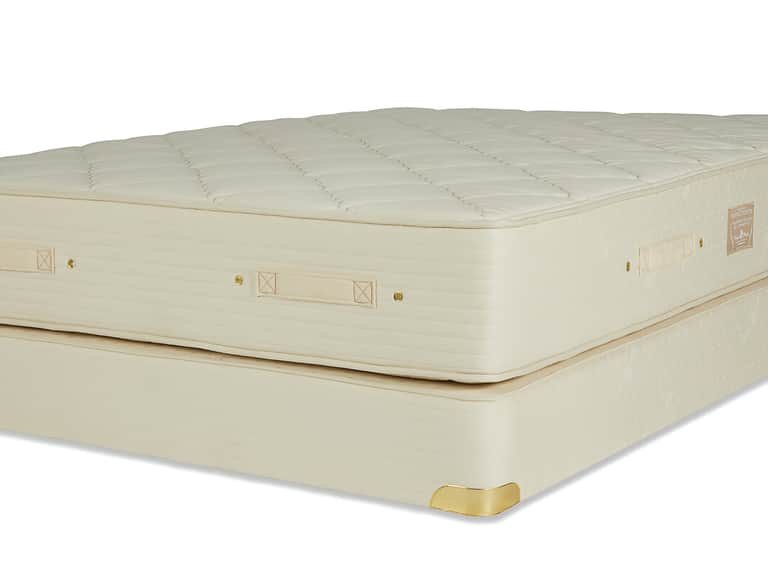
More elaborate constructions may use multiple latex layers with different feels. For example, the Royal-Pedic Natural Latex Quilt-top Mattress is described as having an eight-inch latex core, made up of a six-inch firm layer and a two-inch medium layer, with wool and cotton components in its surrounding construction. That arrangement shows why it is worth asking not only “What materials are used?” but also “Where are they, how thick are they, and what is each layer meant to do?”
Latex, wool, and cotton each bring something different
Latex: springy support
Latex is often chosen for its resilient response. It compresses under pressure but tends to recover its shape promptly, which can make changing position feel less effortful than on a surface that allows a deeper, slower sink. In a mattress, its effect depends on firmness and thickness: a softer top layer may feel more yielding, while a firm, substantial core may contribute a more supportive, buoyant sensation.
Latex is not weightless or invulnerable. A mattress containing it still needs appropriate support, careful handling, and maintenance consistent with its maker’s instructions. It may also feel very different from one person’s expectations based on the word “natural.” Material origin does not tell you whether the bed will feel soft, firm, warm, cool, or comfortable for your body.
Wool: a moisture-managing layer
Wool can absorb moisture vapor and is often used in mattress quilting or upholstery. It can add a soft, textured transition between the core and cover, while contributing to the bed’s overall temperature and moisture behavior. These qualities are part of a material’s performance, not a promise that every sleeper will feel cool in every room.
Wool may also be used in some mattress designs as part of the strategy for meeting flammability requirements. The details vary by product, and a statement about one mattress should not be treated as a universal description of all wool or latex beds. If flame-retardant materials or specific construction choices matter to you, review the manufacturer’s disclosures for the exact model.
Cotton: a familiar fabric for the sleep surface
Cotton commonly appears in mattress covers, ticking, or upholstery. Its feel depends on the weave, weight, finish, and any quilting beneath it. A woven cover can form a durable outer layer, while stretch-knit fabric may move more easily with the layers below. “Cotton” alone does not tell you how a cover will feel or how well it will ventilate; construction and the full combination of materials matter.
For shoppers comparing organic options, look at what a certification actually covers. A certification can help substantiate claims about particular materials or production requirements, but it is not a comfort rating and does not mean every part of a mattress has identical credentials. Ask for the scope and documentation if the distinction is important to your decision.
What mattress airflow really means
Airflow is often discussed as if a mattress either “breathes” or does not. In practice, ventilation is influenced by the whole sleep setup. The mattress’s structure, cover, bedding, room temperature, humidity, and the space beneath the bed can all play a part. A material may allow some movement of air or manage moisture well, but it cannot control a hot room or replace breathable sheets.
Latex’s open structure may allow air to move through the foam, though the amount depends on the latex formulation and how the mattress is assembled. Wool can absorb and release moisture vapor, and cotton may be used in fabrics that feel less occlusive than some alternatives. These qualities can contribute to a more comfortable sleep microclimate, but they do not make any mattress immune to heat buildup.
The bed frame deserves attention, too. If a mattress is placed on a surface that blocks ventilation, moisture may have fewer routes to dissipate from underneath. A compatible slatted base can allow more air circulation than a solid surface, depending on the design and the mattress manufacturer’s requirements. Slat spacing, frame strength, and center support matter: the goal is a ventilated base that also supports the mattress evenly.
Before setting a new mattress on an existing frame, check the specified support requirements. A frame that is too flexible, widely spaced, or otherwise unsuitable can affect how the mattress performs and may influence warranty coverage. If the mattress is adjustable-base compatible, follow the manufacturer’s guidance on the base and how the mattress should be positioned.
Firmness is not the same as support
These terms are sometimes used interchangeably, but they describe different aspects of a mattress. Firmness is the surface sensation—how hard or soft the bed feels to you. Support is about how the mattress bears your body and helps you maintain a comfortable resting position. A mattress can feel firm at first touch yet still behave differently under the hips or shoulders, depending on its construction and the sleeper.
Body shape, weight distribution, sleep position, and personal sensitivity to pressure all affect how a mattress feels. A side sleeper may want more cushioning around the shoulder and hip; a back sleeper may prioritize a surface that feels balanced beneath the lower back. These are starting points for comparison, not clinical instructions or universal rules. If you have persistent pain or a medical concern, a mattress article cannot diagnose the cause or prescribe treatment; discuss health questions with a qualified clinician.
When possible, test a mattress in a realistic position for long enough to notice whether pressure, alignment, and ease of movement feel acceptable. If you are shopping remotely, review the return or exchange policy carefully. Pay attention to trial periods, fees, condition requirements, and whether comfort layers can be changed. A clear policy can be especially useful when adjusting to a material that feels different from your previous bed.
A practical checklist for comparing constructions
Product descriptions can be dense, but a few focused questions make them easier to navigate. Look for specifics rather than relying on broad phrases such as “all natural” or “temperature regulating.” A good comparison starts with the construction, then considers how that construction fits your preferences and bedroom setup.
- What is the latex made from? Check whether the description identifies natural, synthetic, or blended latex.
- How many layers are there? Note each layer’s thickness, material, and stated firmness if provided.
- What surrounds the core? Look for details about wool, cotton, quilting, and the cover fabric.
- What do certifications cover? Verify the certified material or process and the specific product model.
- What base is required? Confirm slat spacing, center support, platform compatibility, and adjustable-base guidance.
- What are the care instructions? Check whether the mattress should be rotated, flipped, aired, or protected.
- What happens if the feel is wrong? Read the trial, exchange, return, and warranty terms before ordering.
Simple care habits that protect the materials
Good maintenance is usually less about elaborate routines and more about following the specific instructions for the mattress you own. Start with the manufacturer’s label and care guide. One design may be flippable while another has a distinct top and bottom. Some mattresses are intended to be rotated periodically; others have different recommendations. Never assume that a routine suitable for one model applies to every latex mattress.
A breathable, properly fitted mattress protector can help shield the surface from spills, body oils, and everyday soiling. Choose one that fits securely and does not introduce a feel or heat level you dislike. A protector adds another layer between the sleeper and the mattress, so its fabric and construction can influence the overall surface experience.
Keep the bed and bedroom reasonably clean and dry. If you need to clean the mattress, use only methods approved by the maker; saturating internal materials can make drying difficult and may damage the construction. Avoid harsh chemicals unless the product instructions specifically allow them. If a spill occurs, act promptly, blot rather than rub, and follow the maker’s directions for drying.
Where the frame permits, occasional airing can help the bed environment feel fresh, but do not leave a mattress in direct sunlight or expose it to moisture in an attempt to “refresh” it. For a mattress that can be flipped or rotated, mark the calendar according to the recommended schedule. A small reminder can be more useful than an ambitious care plan that is hard to maintain.
Common assumptions worth checking
“Natural materials always sleep cooler.”
Natural fibers and latex may offer useful moisture and airflow characteristics, but the final experience depends on the whole mattress and room. A thick cover, close-fitting protector, heavy bedding, warm bedroom, or individual temperature sensitivity can change how the bed feels. Evaluate the complete setup rather than expecting one ingredient to solve overheating.
“Organic means the mattress is automatically right for me.”
Material sourcing may matter deeply to a shopper, but organic status is not a measure of firmness or pressure relief. A certified mattress can still feel too firm, too soft, or simply unfamiliar. Compare comfort, construction, support needs, and the return policy alongside any material standards.
“More layers mean better performance.”
Layer count alone says little about quality. A simpler design may suit someone who wants a more direct, buoyant feel, while a layered model can offer more opportunities to tune comfort. What matters is whether the layers are clearly described, appropriate for the intended use, and comfortable for the sleeper.
The bottom line
Dunlop latex, wool, and cotton can form a thoughtfully composed mattress, with each material playing a different role. Latex can provide resilient support; wool may contribute cushioning and moisture management; cotton can form part of the cover or upholstery. Yet the complete experience comes from the layers working together, the mattress resting on a suitable frame, and the bed being cared for as directed.
When comparing an organic latex mattress or other natural latex mattress, look beyond the headline materials. Ask how the mattress is built, what certifications apply, whether the frame is compatible, and what the care and return policies require. That practical homework won’t make a mattress choice perfectly predictable—but it can replace guesswork with a much clearer picture of what you are bringing into the bedroom.